
Transcript
Dr. Ramnarine:
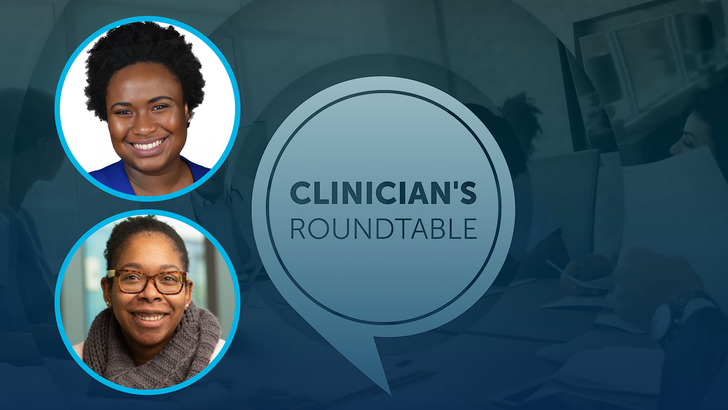
Welcome to Clinician’s Roundtable on ReachMD. I’m Dr. Shelina Ramnarine, and today, I’m joined by Dr. Yolanda Evans. We will discuss how clinicians can provide more equitable pediatric care, which she discussed at the 2025 American Academy of Pediatrics National Conference and Exhibition. Dr. Evans is a board-certified pediatrician and adolescent medicine specialist practicing in Seattle, Washington.
Dr. Evans, thank you so much for being here.
Dr. Evans:
Thank you for having me on the program.
Dr. Ramnarine:
Well, Dr. Evans, let’s dive right in. What does health equity look like in a pediatric setting?
Dr. Evans:
Health equity in a pediatric setting is one where we have youth and families coming from all different backgrounds and a variety of different needs, and when we offer care, we’re offering care that addresses each of those needs based on what the family and the patients are requiring to achieve health. So for me, equity really means that we are tailoring our services and our care delivery to meet the needs of the patient in front of us.
Dr. Ramnarine:
And how do you see inequities show up in pediatric care, particularly amongst marginalized groups?
Dr. Evans:
We see inequities show up in all different ways. It can be from step one—how do they make the appointment? Are they able to read through a website? Do they have the time to be on a phone on hold to make an appointment? Two: navigating insurance barriers. I think the inequities start before they even get into the exam room with us as the pediatrician or the healthcare provider.
And then when we think about coming into our care setting, are the equipment and chairs and things able to accommodate the family? Do we have representation in terms of the imagery that’s in our clinical setting? Are there information, instructions, and consents in a language that the family can understand and navigate? It shows up in many different ways. And then we take it all the way down to actual health outcomes—do we see differences in health outcomes based on a patient’s race, ethnicity, language preference, or socioeconomic status? And if we do see differences, then those are inequities.
Dr. Ramnarine:
For those just tuning in, you’re listening to Clinician’s Roundtable on ReachMD. I’m Dr. Shelina Ramnarine, and I’m speaking with Dr. Yolanda Evans about how we can prioritize equity in pediatric care.
So, Dr. Evans, I’d like to ask you about actionable ways we can better care for our pediatric patients. How can we engage patients and caregivers in equity-centered management?
Dr. Evans:
This is a great question. How do we engage in equity-centered management? For me, the first step is to talk to our patients and families about what they need rather than me automatically sharing treatment plan recommendations based on my own knowledge, assumptions and ideas. I pause and ask the family what they need and what their goals are, and if their goals and needs are a little bit different, I talk to them about what it would take or what would be needed to achieve the health outcomes to get their kid to whatever state we want them to get to.
I think the other part is remembering that we all generally have the same ultimate goal, which is that this child in front of us is able to grow and develop into a healthy, functional adult. And so, as we’re partnering with our families, we’re really keeping that goal in mind. But I think the first step is to pause and ask our families and patients what they need.
Dr. Ramnarine:
Now, what specific frameworks or screening tools can help us center equity in clinical decision-making?
Dr. Evans:
We think about the socioecological framework quite a bit in healthcare, and that framework says, as we’re thinking about systems and challenges, we’ve got an individual, and there are different things that come up for the individual. We have the community, and there are different needs based on a community setting. There is our region—thinking about the county or the state that the family is in. So I think the socioecological framework is really helpful to think about how do we address equity.
And we could look at it on a patient-facing level, like the individual community and larger. And then, from a clinical standpoint, we can also think about it from our clinics—like my own internal clinic, the system that my clinic is in, the hospital system, and the healthcare authority in my state. We can look at it that way as well. I feel like those are really helpful to think about what challenges might be coming up in each of those different settings and what are the resources or tools that I might need to address those challenges in each of those settings.
The other tool that I think is helpful is to have a screener for social determinants of health in our clinical practice settings. We don’t necessarily need to have a very cumbersome, long tool, but at least addressing some of those things outside of the exam room that might be impacting health and asking families about that when they come in.
Dr. Ramnarine:
Now, let’s talk about technology a little bit. We know that technology can bridge and widen gaps in care, so how would you recommend using digital tools to effectively care for our pediatric patients?
Dr. Evans:
I actually love technology quite a bit. With our electronic health records that are in place in many practice settings, there’s an opportunity to track data and to look at trends and patterns, and so I think that we as healthcare providers can leverage that to improve care.
An example would be language access. We are asking families if they have a language preferred for care other than English and then tracking that and seeing what our volumes look like, and if we see that most of our families are asking for a preferred language of a different type, then maybe we adjust and accommodate and create tools and translation services for common handouts in that language, as an example.
I think patient portals are another tech tool that we often will use. That comes with some challenges too with access and being able to get into portals, but it’s potentially something that could be beneficial. And then, of course, there’s telemedicine and telehealth and leveraging the ability to connect with patients and families in a way that is appropriate and comfortable for them so they don’t necessarily have to take time off work or miss school or commute from far away. I live in a state where patients are driving hours across mountain passes in the winter to come to an appointment. Can I leverage telehealth to offer care? So there’s lots of different tech tools that we can use.
Dr. Ramnarine:
It sounds like there are a lot of things that are available. So in our last few moments here, Dr. Evans, do you have any key takeaways you’d like to share with clinicians who are looking to build more equitable practices for their pediatric patients?
Dr. Evans:
If we are thinking about care delivery, the first step is talking with our patients, families, and staff about what gaps there are and really being mindful that as we’re trying to think about ways to address those gaps, we’re also asking for their input about what’s needed.
Again, I’m from Washington, and our Washington chapter of the American Academy of Pediatrics Equitable Care Committee has created a toolkit that we can use. It’s open access and publicly available, and it can walk providers through thinking through questions around clinical design or care delivery to try to improve some of the disparities that we see in healthcare too. So I think leaning into tools like that that are free and accessible through our AAP resources is really helpful as well.
Dr. Ramnarine:
With those key takeaways in mind, I want to thank my guest, Dr. Yolanda Evans, for joining me to discuss how clinicians can integrate equity into practice.
Dr. Evans, it was great having you on the program.
Dr. Evans:
Thank you so much for having me. And I’m excited to see everyone at NCE.
Dr. Ramnarine:
For ReachMD, I’m Dr. Shelina Ramnarine. To access this and other episodes in our series, visit Clinician’s Roundtable on ReachMD.com, where you can Be Part of the Knowledge. Thanks for listening.
